


Last Updated: October 26, 2026
Quick Summary
Choose a beginner fishing rod by matching it to where you'll fish, then picking a spinning rod with a 2-4kg light rating and fast or moderate-fast action. Start with a 1.8-2.1m length, and buy a rod and reel combo so the parts are already matched.
- Spinning rods are easier to cast, less prone to tangles and cheaper to set up than baitcasters.
- The 2-4kg light rating is the sweet spot for most first rods.
- Start at 1.8-2.1m unless you know you'll fish the beach.
- The Shimano FX 662 2-4kg combo costs $69.99 and carries a 10-year warranty.
- Run a cotton bud around each guide; if it catches, the guide will fray your line.
Table of Contents
- Step 1: Match Your Rod to Where You'll Fish
- Step 2: Spinning vs Baitcasting Rods for Beginners
- Step 3: Fishing Rod Power and Action Explained
- Step 4: A Simple Fishing Rod Length Guide
- Step 5: Rod Materials, Guides and Handles That Matter
- Step 6: Why a Beginner Fishing Rod and Reel Combo Saves Money
- Step 7: Picking a Fishing Rod for Beach Fishing
- Storing, Transporting and Troubleshooting Your First Rod
- Frequently Asked Questions
Step 1: Match Your Rod to Where You'll Fish
Learning how to choose a beginner fishing rod starts with one question: where will you actually fish? A rod built for a quiet estuary will frustrate you on an open beach, and a heavy surf rod feels clumsy on a small river.
Here's the rough split we use when advising new anglers:
- Estuaries and rivers: light 2-4kg rods for bream, flathead and whiting
- Lakes and dams: medium rods that handle both lures and bait
- Beaches and rocks: longer, heavier rods built for distance and salt
Most beginners fish estuaries, so start there. If you want to see which brands are worth shortlisting before you narrow down, our best fishing rod brands guide covers the reputable names.
Step 2: Spinning vs Baitcasting Rods for Beginners
Spinning rods are the right first rod for almost every beginner. They sit under the reel, cast with a simple release, and forgive clumsy timing.
Spinning wins for three reasons:
- Easier to cast without practice
- Less prone to tangles in wind
- Cheaper to set up properly
Baitcasters offer better accuracy and control for experienced anglers throwing heavy lures. That's a second-rod purchase, not a first one. If you still want to explore the style, browse our baitcast rods range to see what's available.
Step 3: Fishing Rod Power and Action Explained
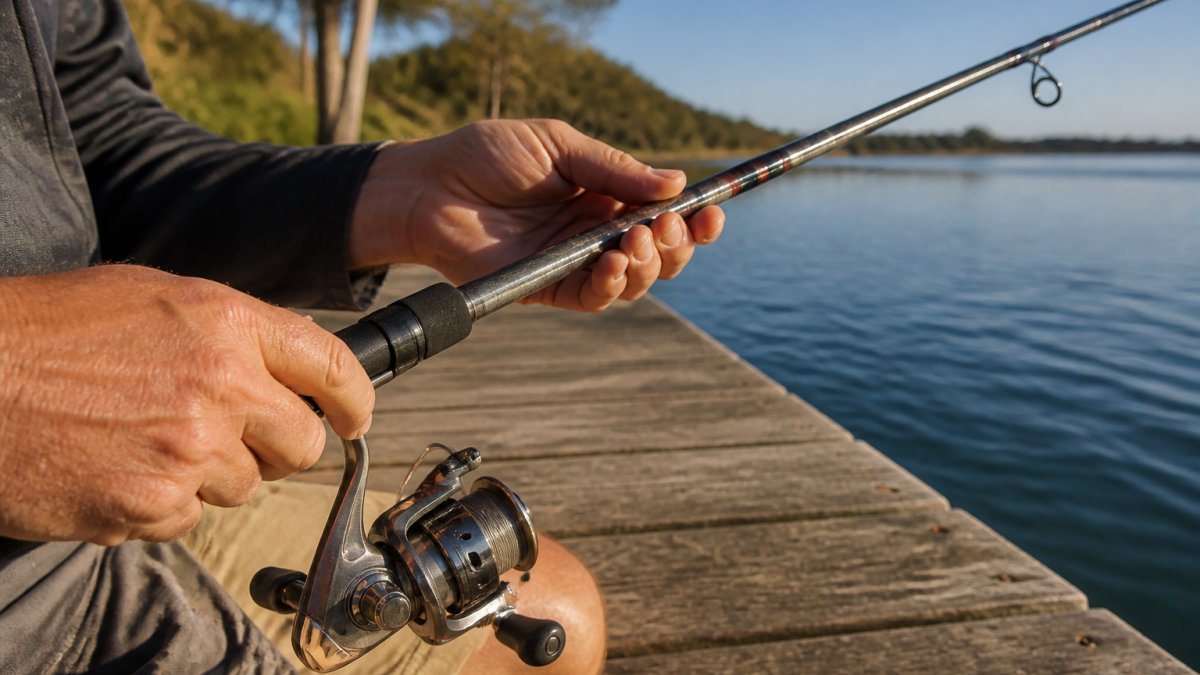
Rod power is how much weight a rod can handle before it bottoms out. Rod action describes where the rod bends along its length.
Power: the weight class of the rod
Power is the rod's lifting and casting capacity. Most manufacturers print it on the blank above the handle, usually as a line rating (for example 2-4kg) and sometimes as a lure weight range (for example 3-15g).
| Power | Typical line rating | Typical lure weight | Best for |
|---|---|---|---|
| Ultralight | 1-2kg | 1-5g | Bream, trout, small whiting in calm water |
| Light | 2-4kg | 3-15g | Estuary flathead, bream, whiting, bass |
| Medium | 4-8kg | 10-30g | Dams, inshore reefs, larger flathead, salmon |
| Medium-heavy | 6-10kg | 20-50g | Beach gutters, rock ledges, bigger lures |
| Heavy | 8-15kg+ | 40g+ | Surf, offshore, big bait presentations |
A rod fished above its power rating feels mushy and cannot set a hook cleanly; fished far below, it feels stiff and will not load, so you lose distance.
Action: where the bend happens
Action describes how far down the blank the rod flexes under load. It is usually labelled slow, moderate, moderate-fast or fast.
- Fast action: the top third bends first. The stiff lower section gives quick hook sets and good sensitivity for soft takes, suiting single-hook lures and soft plastics.
- Moderate-fast action: the top half bends. A good all-rounder for beginners, sets hooks well but forgives timing errors.
- Moderate action: bends through the middle. The softer tip protects light line and keeps treble-hooked lures pinned, suiting hardbody lures and crankbaits.
For a first rod, a 2-4kg blank with fast or moderate-fast action covers the widest ground. If you plan to fish mostly hardbody lures with trebles, lean moderate; if you plan to fish soft plastics and bait, lean fast.
Read the printed ratings before you buy
Every rod sold in Australia should carry a line rating and, on lure rods, a lure weight range. Match both to what you will actually throw:
- A rod rated 2-4kg pairs with roughly 4-8lb line. Spooling 15lb braid onto it overloads the blank, a common beginner mistake that collapses casting distance and can break the tip under a snag.
- A lure rating of 3-15g means the rod loads properly with lures in that window. A 40g metal feels fine in the shop and terrible on the water.
- Missing or vague printed ratings are a warning sign about the blank's quality control.
Common power-and-action mistakes beginners make
- Buying heavy 'just in case': a heavy rod makes small estuary fish feel like nothing and ruins the fight.
- Mismatching line to power: line heavier than the rod's rating is the most common cause of snapped line and poor casting distance.
- Assuming fast is always better: fast action is less forgiving on treble-hooked fish and can pull hooks on soft-mouthed species.
Get power and action right and length, material and reel fall into place around them.
Step 4: A Simple Fishing Rod Length Guide
A fishing rod length guide for beginners comes down to three ranges. Shorter rods are easier to control; longer rods cast further and fight fish better.
| Length | Best For | Why It Works |
|---|---|---|
| 1.5-1.8m | Kids, tight spots, boat work | Easy to swing, easy to store |
| 1.8-2.1m | Estuaries, rivers, general use | Balanced control and cast distance |
| 2.1-3.0m | Beaches, rocks, open water | Longer cast, better line control |
Start at 1.8-2.1m unless you know you'll fish the beach. It's the length most beginners keep using long after they upgrade.
Step 5: Rod Materials, Guides and Handles That Matter
Fiberglass is the beginner-friendly material: tough, cheap and forgiving of knocks. Graphite is lighter and more sensitive but brittle if dropped or shut in a car door. Composite blanks blend both, often the smart middle ground.
Blank materials: what you actually feel
- Fibreglass: heavier and less sensitive, but bends a long way before breaking. That forgiveness is why fibreglass dominates entry-level combos, a dropped fibreglass rod usually survives where graphite chips or snaps. The trade-off is weight and a duller feel for soft takes.
- Graphite (carbon): lighter and far more sensitive, so you feel a bream's tentative tap that fibreglass masks. The trade-off is brittleness: graphite fails suddenly under point loads like a car boot lid or a high-stick while landing a fish.
- Composite (fibreglass/graphite blend): keeps sensitivity near the tip and toughness through the mid and butt. For a first rod that will be knocked about, composite is often the most sensible compromise.
A common mistake is buying a featherweight graphite rod as a first purchase. It feels great in the shop and snaps the first time it meets a car boot lid.
Okuma Steeler XP 562 Spin Combo →
Guides: the cheapest part to get wrong
Guides are the rings the line runs through, and they are the most common point of failure on a cheap rod. Look for:
- Smooth, hard inserts: ceramic or stainless inserts that do not catch a fingernail dragged across the inner surface. A rough guide shreds line, especially braid, causing mysterious break-offs mid-cast.
- Corrosion resistance: saltwater destroys plated guides quickly. Stainless frames with quality inserts outlast painted or plated steel.
- Even spacing and alignment: guides should sit in a straight line along the spine. A misaligned guide pulls the line off-centre and costs distance.
Reel seat: the joint that decides everything
The reel seat clamps the reel to the blank, and a loose seat ruins an otherwise good rod. Check that:
- The reel foot sits flush and the hoods tighten firmly with no wobble.
- The seat is aligned with the guides so the reel sits square under the blank.
- The locking nut does not back off under load, a common fault on very cheap seats.
Even slight movement changes the line's path through the guides and costs accuracy and distance.
Handle: cork versus EVA foam
- Cork feels warm, grips well when wet and transmits vibration clearly, but chips and dries out if neglected.
- EVA foam lasts longer, cleans easily and resists salt and sunscreen, but feels deader and can compress under heavy use.
For a first rod that will see salt and the back of a car, EVA is lower maintenance; cork is the better feel if you will look after it.
Rod blank: the ten-second inspection
Before you pay, sight down the blank from butt to tip. It should be straight with no flat spots, no cracks or chips, and no uneven flex under a gentle bend. A blank that kinks or creaks under light load is a reject, regardless of brand.
Component faults that show up later
Most beginner rod failures trace back to a component, not the blank:
- Line fraying near the tip: a rough tip guide. Replace the tip-top before it costs you a fish.
- Reel wobbling under load: a worn or poorly made reel seat. Re-tighten; if it persists, the seat is the problem.
- Grip slipping when wet: worn cork or compressed foam. Clean and dry after every trip.
Two minutes checking guides, seat and blank straightness in the shop avoids the most common first-rod failures.
Step 6: Why a Beginner Fishing Rod and Reel Combo Saves Money
A beginner fishing rod and reel combo costs less than buying rod and reel separately, and the parts are already matched. You skip the guesswork of pairing a reel to a rod's line rating.
Our pick for most new anglers is the Shimano FX 662 2-4kg combo at $69.99. For kids, the Okuma Steeler XP 562 Spin Combo at $49.00 is pre-spooled and ready to fish straight from the box.


If you'd rather compare a wider set of rods before committing, our best fishing rods collection is a good starting point.
Step 7: Picking a Fishing Rod for Beach Fishing
A fishing rod for beach fishing needs length and backbone. You're casting into wind, over the surf zone, and often holding the rod high to keep line above the wash. Look for 2.4-3.0m length, medium to heavy power, and a reel that holds enough line for long runs. A light estuary rod taken to the beach will cast short and struggle in the surf, and salt destroys gear that isn't rinsed.
Storing, Transporting and Troubleshooting Your First Rod
Most first rods die in storage, not on the water. A few habits keep yours alive for years:
- Store rods vertically or flat, never leaning on the tip
- Loosen drag after every trip to protect the washers
- Rinse with fresh water after salt use, then dry before storing (Decontaminating fishing equipment and vessels)
Common beginner problems and fixes:
- Line keeps snapping: line rating doesn't match the rod, or the drag is locked
- Poor casting distance: too much line on the spool, or the wrong lure weight
- Tangles in wind: switch from braid to mono while learning
At Fergo's Tackle World, we've been helping new anglers since 1960, and our team will talk you through a rod choice without pushing the most expensive option. If you're unsure, ask us before you buy.
Frequently Asked Questions
What length fishing rod is best for a beginner?
Most beginners do well with a rod around 1.8 to 2.1 metres. That length is easy to cast, manageable in tight spots and light enough to hold all day. Shorter rods suit kids and estuary banks, while longer rods help with beach fishing and casting distance. If you plan to fish from a boat or crowded rocks, stay on the shorter end. A two-piece rod in this range also packs down easily for transport.
Should a beginner buy a rod and reel combo?
Yes, a beginner fishing rod and reel combo is usually the smartest first purchase. The rod and reel are already matched, often spooled with monofilament line, and you avoid guessing which reel suits which rod. Combos like the Shimano FX 662 2-4kg with FX2500FC reel at $69.99 or the Okuma Steeler XP 562 Spin Combo at $49.00 get you on the water quickly. Check the line rating and rod power suit your target species before buying.
What rod power should a beginner choose?
A light to medium power rod covers most beginner situations. In Australia that usually means a 2-4kg rod, which handles bream, flathead, whiting and light saltwater work without feeling like overkill. Heavier power rods suit bigger species and rough ground but cast small lures poorly. Match the rod's line rating to the line you plan to use, and keep lure weights inside the rod's stated range so the blank loads properly on the cast.
Do I need a different rod for beach fishing?
A fishing rod for beach fishing is usually longer, around 2.4 to 3.6 metres, to lift line above the surf and cast past the break. It also carries heavier sinkers and line than an estuary rod. Beginners who fish both environments often start with a versatile 2-4kg estuary combo and add a dedicated beach rod later. If the beach is your main spot, buy the longer rod first and pair it with a reel rated for saltwater use.
Choosing your first rod is a decision you'll live with for years, so getting the basics right matters. Fergo's Tackle World stocks many beginner combos, offers a price match against any Australian-based retailer, and our team gives honest advice based on where you actually fish. Get started with Fergo's Tackle World and head to the water with gear that fits.


