


Table of Contents
- Start With a Plan: Your First Trip Walkthrough
- Fishing Gear for Beginners: What You Actually Need
- Choosing a Rod and Reel (Without Overspending)
- Hooks, Line and Tackle Box Basics
- The Best Bait for Beginner Fishing (and When to Use Lures)
- How to Set Up a Simple Fishing Rig
- How to Cast a Fishing Rod: Step by Step
- How to Identify Fish Species for Beginners
- Frequently Asked Questions
Last Updated: October 5, 2026
Start With a Plan: Your First Trip Walkthrough
Most beginner fishing basics for adults fail on the first trip because people buy gear before they understand what they're doing with it.
Fishing is a simple sport with a lot of small details. Get the order right and you'll spend more time with a line in the water and less time untangling mistakes.
Here's the plan we give every first-timer who walks into our stores.
Before You Leave Home
Check the local rules before anything else. You need a fishing licence in most states, and the rules differ by region. State fishing licence and rules information covers what applies where you plan to fish.
Next, match your gear to the water in front of you:
- Estuary or calm river: light rod, small hooks, light line
- Beach or rocks: longer rod, heavier line
- Jetty or wharf: all-rounder setup works fine
Pack a basic safety kit: water, sunscreen, hat, pliers, and a small first-aid kit. Fishing etiquette matters too, so keep your distance from other anglers and leave the spot cleaner than you found it.
At the Water: A Simple Order of Events
Set up away from the water's edge, not on it. This keeps you and your gear safe while you tie knots and sort tackle.
Follow this order:
- Set up your rod and reel and check the drag
- Tie your rig and bait up
- Find a clear casting lane with no people behind you
- Cast, then let the bait settle
- Watch the line, not the rod tip
- Re-bait after every missed bite or snag
Patience wins here. Most first-timers cast too often and spook the fish.
Fishing Gear for Beginners: What You Actually Need
You need far less gear than the shop shelves suggest. A rod and reel combo, line, a few hooks, some sinkers, and one small tackle box will catch fish on your first trip.

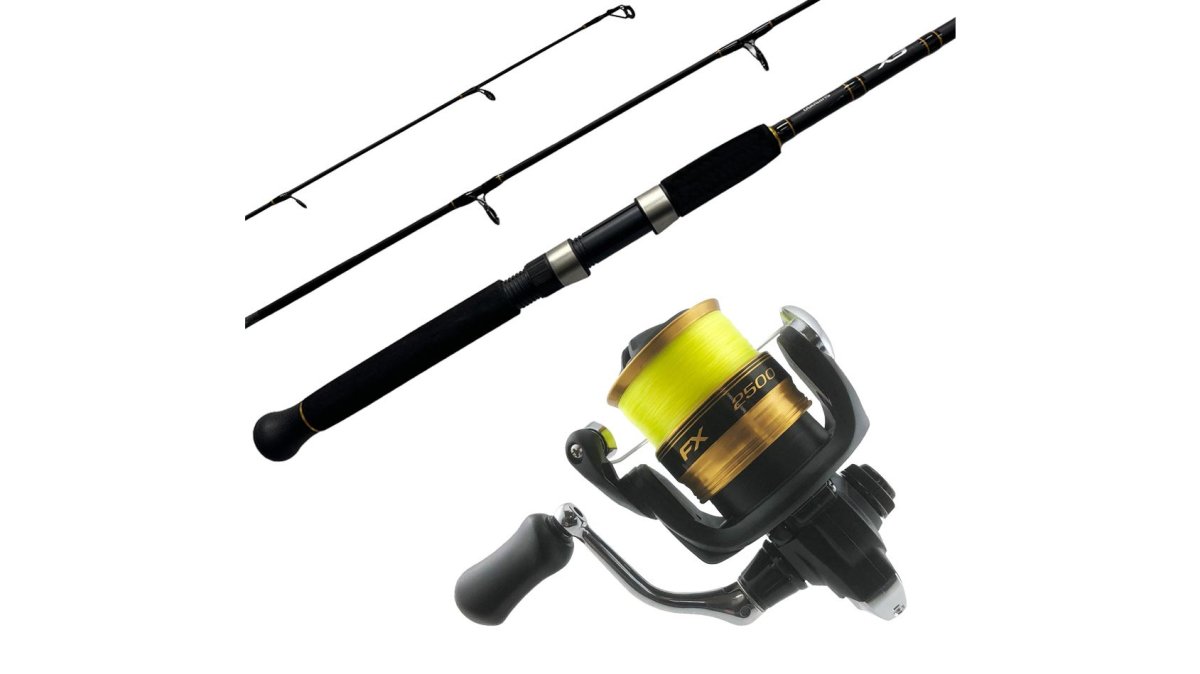
Start with a combo rather than buying a rod and reel separately. It's cheaper and the pieces are already matched.
Our pick for a first setup is the Shimano FX 662 2-4kg + Shimano FX2500FC Reel Combo.
If you want something even simpler for a family trip, the Okuma Steeler XP 562 Spin Combo is pre-spooled and ready to go straight out of the packaging.

Choosing a Rod and Reel (Without Overspending)
A rod and reel that matches your target species will out-fish an expensive setup that doesn't. Spend your budget on the right size, not the highest price tag.
For most beginners, a light spinning reel paired with a 1.8 to 2.1 metre rod covers estuary fishing, jetties, and calm beaches. You do not need a $200 rod to catch your first flathead.
Rod Length and Line Rating in Plain Terms
Rod length affects how far and how accurately you cast. Line rating tells you what weight of fish and line the rod handles.
- 1.8 to 2.1 metre rod: tight spaces, jetties, small estuaries
- 2.7 to 3 metre rod: beaches and open water, longer casts
- 2-4kg rating: bream, whiting, small flathead
Match your line to the rod rating. A 2-4kg rod with 20kg line is a mismatch that snaps rods.
Hooks, Line and Tackle Box Basics
Your tackle box should hold hooks, sinkers, swivels, and a couple of pre-tied rigs. Keep it small and organised so you're not digging for a hook while your bait washes off.
For hooks, size matters more than brand. A size 1 to 2/0 hook covers most estuary species.
Line choice comes down to two options:
- Monofilament: cheap, stretchy, forgiving for beginners
- Braid: thinner, more sensitive, less forgiving on knots
Start with mono. It's more tolerant of mistakes.
Pack spare rigs. Tying a new rig on the water with cold hands is miserable, so pre-tie two or three at home.
The Best Bait for Beginner Fishing (and When to Use Lures)
The best bait for beginner fishing is fresh local bait that matches what the fish already eat. Prawns, worms, and pilchards are the reliable starting points, but the reason they work matters more than the list.
Bait beats lures for beginners because it works even when your casting and retrieve are rough. You cast it out, let it sit, and wait.
Shimano FX 662 2-4kg + Shimano FX2500FC Reel Combo →
Choosing Bait by Water and Target
| Bait or Lure | Best For | Difficulty | Why It Works |
|---|---|---|---|
| Prawns | Bream, flathead, whiting | Easy | Strong scent, stays on the hook reasonably well |
| Worms | Whiting, bream | Easy | Natural movement in the water, irresistible to whiting |
| Pilchards | Salmon, mulloway | Easy | Oily scent trail, good for berleying too |
| Soft plastics | Flathead, bream | Medium | Action does the work on a slow retrieve |
| Hard-body lures | Salmon, tailor | Medium | Cover water fast, trigger reaction strikes |
How to Present Bait So It Actually Gets Eaten
Presentation is where most beginners lose fish. Three habits make the biggest difference:
- Use the smallest bait that still covers the hook. A bait ball bigger than your target's mouth gets nibbled off without a hook-up.
- Thread prawns and worms so the hook point sits exposed at the tail end. If the point is buried, the fish feels the bait and drops it.
- Let the bait sink to the bottom on a running sinker rig, then tighten the line just enough to feel the weight. Too much slack and you miss the bite; too much tension and the fish feels resistance.
Bait Storage and Freshness
Warm bait falls off the hook and stops working. Keep bait cold and out of the sun in a small esky or insulated bait box. Frozen pilchards should be partially thawed, not mush; a half-frozen pilchard stays on the hook far better than a fully thawed one. If you are using prawns, keep them in a sealed container so the juice does not leak through your tackle box.
When to Switch to Lures
Use lures when you want to cover more water or target active predators. Soft plastics on a jig head are the easiest lures to learn because the action does the work for you: cast, let it sink to the bottom, then lift the rod tip and let it drop again on a slow retrieve.
Hard-body lures suit salmon and tailor when fish are actively feeding near the surface. They cast further than soft plastics, which helps on open beaches, but they are also easier to lose to snags and tangles while you are learning.
How to Set Up a Simple Fishing Rig
A simple running sinker rig catches most estuary species and takes two minutes to tie.
Here's how to build it, step by step:
- Thread your main line through a small sinker
- Tie the line to a swivel
- Cut a 40-60cm length of line for your leader
- Tie one end of the leader to the swivel
- Tie your hook to the other end
- Bait up and you're ready to cast
The sinker slides on the main line, so fish can take the bait without feeling the weight. That's why it works so well.
Learn one knot and use it for everything. The improved clinch knot ties line to hook and swivel, and it holds well with mono.
How to Cast a Fishing Rod: Step by Step
Casting is the skill beginners worry about most, and it's the easiest to fix. A smooth overhead cast with a light flick beats a hard throw every time.
Here's how to cast a spinning reel:
- Hold the rod with your reel hand, line running to your finger
- Open the bail arm and trap the line against the rod with your index finger
- Point the rod back over your shoulder
- Sweep the rod forward and release the line as it passes your head
- Close the bail arm by hand, then reel in the slack
Aim for a gentle arc, not a hard snap. Hard casts cause tangles and wind knots.
Practise in a park or on open grass before you fish. Ten minutes of practice saves an hour of untangling on the water.
How to Identify Fish Species for Beginners
You identify fish by body shape, fins, colour, mouth position, and where the fish was caught. Match what you catch against a local species guide rather than guessing, because identification is the first step in staying legal.
For beginners, learning five common species covers most catches:
- Bream: deep body, silver, small mouth, often around structure
- Flathead: flat head, mottled brown, sits on the bottom
- Whiting: slim silver body, small pointed mouth, sandy shallows
Why Identification Is a Legal Skill, Not Just a Hobby Skill
Every state and territory sets size limits, bag limits, and protected species lists, and they differ by waterway. A fish that is legal to keep in one estuary may be undersized or protected in the next. Before you keep anything, check the current rules for the exact water you are fishing, not the rules for the state generally.
A practical routine that keeps beginners out of trouble:
- Identify the fish before you unhook it if you can.
- Measure it against the local minimum size using a marked brag mat or ruler, not an estimate.
- Count what you already have against the bag limit for that species.
- Release anything you are unsure about. Releasing a legal fish costs you nothing; keeping an illegal one can carry fines.
current size, bag and possession limits by state
Handling Fish So They Survive Release
Catch-and-release only works if the fish swims away strongly. A few habits make the difference:
- Wet your hands before touching a fish. Dry hands strip the slime layer that protects it from infection.
- Support the belly and avoid holding fish vertically by the jaw unless the species is built for it.
- Use pliers or a hook-out to remove hooks quickly. If the hook is deep or in the gills, cut the line as close to the hook as you can and release the fish rather than digging around.
A Simple ID Kit for Your Tackle Box
You do not need to memorise everything. A cheap fish ID card, a laminated species guide from your local tackle shop, or a reputable phone app takes the guesswork out of your first catches. Keep a small ruler or brag mat in your tackle box so you can measure without leaving the fish on dry ground while you search for one.
Frequently Asked Questions
What basic fishing gear does an adult beginner need?
Start with a light spinning combo (rod, reel and pre-spooled line), a small tackle box, hooks, sinkers, swivels, a couple of baits or lures, pliers, line clippers, a towel and a first-aid kit. A combo like the Shimano FX 662 2-4kg with FX2500FC reel at $69.99 covers estuary and light saltwater fishing and comes ready to fish. Add a bucket, sun protection and a landing net for larger catches. You do not need premium gear to catch your first fish.
How do you cast a fishing rod for the first time?
Hold the rod with your dominant hand near the reel, and use your other hand to open the bail arm and trap the line against the rod with your index finger. Bring the rod back to about 45 degrees, then sweep it forward smoothly and release your finger as the rod passes vertical. Aim for a spot, not distance. Practise on grass with a sinker and no hook before you fish. Smooth motion beats force every time.
What is the best bait for a beginner fishing trip?
Fresh bait that stays on the hook is easiest. Prawns, squid strips, pilchards and worms all work well in estuaries and inshore. If you prefer lures, soft plastics rigged on a jighead catch bream, flathead and similar species. Match bait size to your hook so it looks natural. Take a small mixed selection so you can switch if fish ignore one option. Local tackle shop advice on what is biting that week saves a lot of trial and error.
Do I need a licence to fish as a beginner?
Recreational fishing rules differ by state and territory in Australia. Some require a licence for certain waters or species, and all have size and bag limits. Check the rules for the specific waterway you plan to fish before you go, and carry any required licence. Size and bag limits protect fish stocks, so measure your catch and release anything undersized quickly and carefully. Fishing rules are enforced, and the penalties apply to beginners and experienced anglers alike.
Your first fishing trip doesn't need perfect conditions or premium gear. It needs the right plan, a matched rod and reel, and a bit of patience. At Fergo's Tackle World, we've been helping beginners since 1960, and our team will match you to gear that suits your water and your budget. We price match any Australian-based retailer, ship fast, and offer free shipping on qualifying orders. Get started with Fergo's Tackle World and walk onto the water confident for your first cast.


